At 3:00 PM on December 29, 2025, the Seminar on Intelligent Image Computing between China and Belarus was held in Room 823 of the Library and Information Building at Zhejiang Shuren University. Professor Vladimir Golovko, former Head of the Intelligent Technology Information Department at Brest State Technical University in Belarus, delivered an in-depth seminar titled “From Single Layer Perceptron to Deep Learning: Selected Aspects of the Evolution of Artificial Intelligence”, offering a thorough analysis of the AI evolution process to attending faculty and students. The seminar was jointly organized by the Zhejiang-Belarus Joint Laboratory of Intelligent Image Computing and the International Cooperation Base for Remote Sensing Image Processing and Applications, attracting a large number of teachers, postgraduate students, and undergraduate attendees.
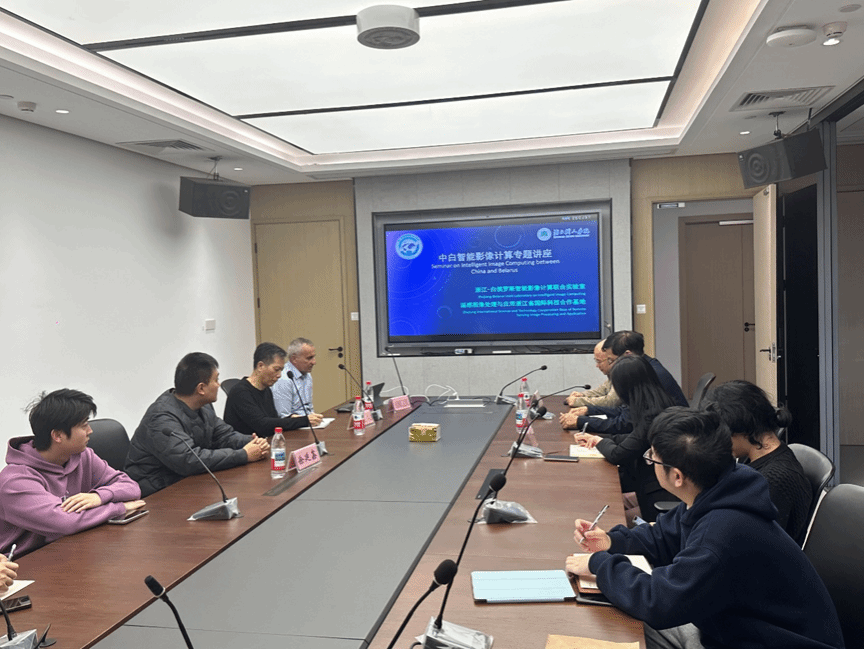
Professor Golovko, an expert in deep learning, neural networks, and pattern recognition, has been honored twice with the Presidential Award of Belarus in 2000 and 2005, highlighting his distinguished standing in the global academic community. During the seminar, he systematically outlined the developmental journey of AI from single-layer perceptrons to deep learning. Drawing from his laboratory experience, he vividly explained key breakthroughs such as algorithmic optimization and data-driven approaches, presenting abstract principles through intuitive visual cases. He emphasized that the leap in AI is not only an inevitable outcome of technological accumulation but also a reflection of human wisdom exploring the unknown and extending cognitive capabilities.
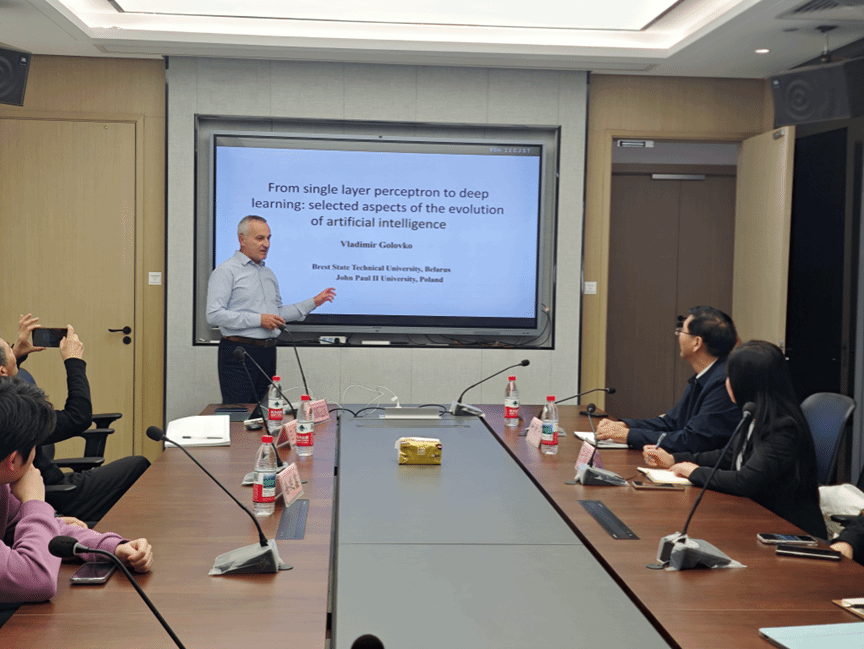
The seminar not only conveyed cutting-edge knowledge but also inspired reflections among faculty and students on the application of AI in fields such as remote sensing and healthcare. It further demonstrated Zhejiang Shuren University’s commitment to advancing “Intelligent+” disciplinary development, strengthening international cooperation, and attracting top-tier scholars.